

 Call us
 Email us
Medically Reviewed by Dr. Apoorva Aggrawal, MS | Shroff Eye centre
Many people find wearing specs a hassle and their dependence on them, frustrating. This is especially true if you’ve worn them for a long time and find it irritating to wear contact lenses for long periods of time.
LASIK eye surgery is a popular vision correction procedure that can help reduce or eliminate the need for glasses or contact lenses. The treatment reshapes the cornea using a laser so that light focuses correctly on the retina, allowing clearer vision.
If you’re want to get rid of your specs and get vision correction, LASIK laser eye surgery might be you.
What is LASIK Eye Surgery?
LASIK stands for Laser in Situ Keratomileusis. It is a laser vision correction procedure used to reshape the cornea, the clear front surface of the eye.
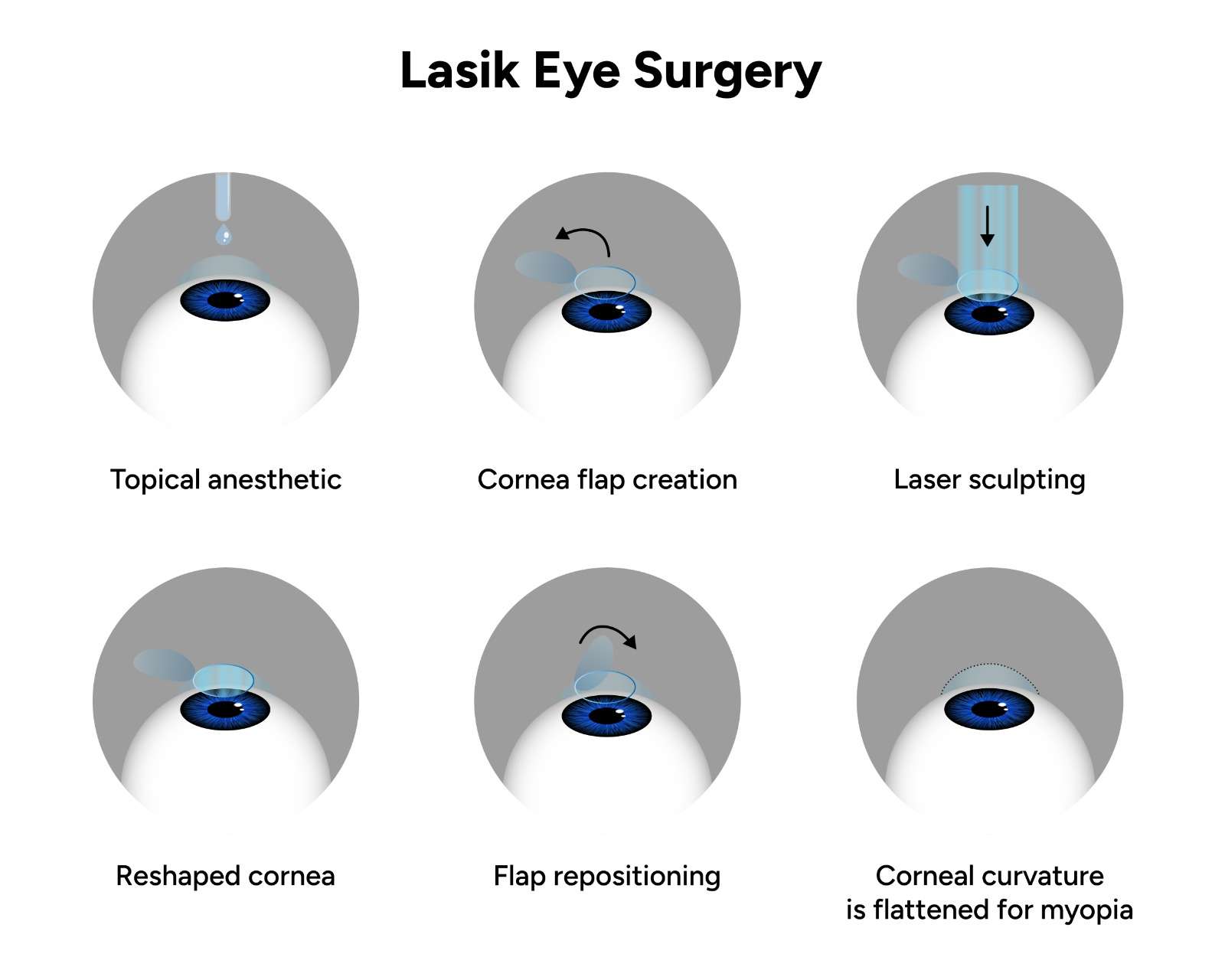
It uses laser beams to correct the vision by reshaping the cornea, allowing light to focus on the retina properly. This ensures that you are able to see clearly without your specs.
LASIK is a common and popular treatment option that can correct
- Nearsightedness (myopia)
- Far-sightedness (hyperopia)
- Astigmatism
Who Is Eligible for LASIK Surgery?
Eye specialists evaluate several factors before recommending this treatment. A detailed eye examination helps determine whether the procedure is safe and effective for you.
You are a good candidate for LASIK if –
-
You have stable vision for 1 year
One of the very first prerequisite for LASIK is you need to have stable vision eye power for atleast 1 year. Till the vision doesn’t stabilize, it may be pointless to get vision correction as vision will change even after the laser correction in this scenario!
-
You are older than 18 years of age
You need to be at least 18 years of age to opt for this surgery. This is because the vision is still changing in people under 18 years of age.
-
Your eye power is within the safe limits for correction
LASIK can be performed if your eye power is within certain ranges –
Myopia: -0.50 to -10.00
Hyperopia: +0.50 to +4.00
Astigmatism: +/- 0.50 to +/- 4.00
If your eye power is not within these ranges, LASIK may not be an option for you. However, there are alternative methods that might be suitable such as ICL. A consultation with our LASIK eye surgeons in Delhi NCR will be best to discuss your options.
Your corneal thickness is adequate
When you come for a pre- LASIK check up, we measure your corneal thickness. If the corneal thickness is adequate (>500 microns), and you meet other criteria for LASIK- vision correction surgery can be done safely for you. If your corneal thickness is not adequate- LASIK is NOT safe for your eyes as it can lead to complications in the future. Your surgeon may suggest PRK (EpiLASIK) or ICL if your corneal thickness is less.
Who Should Not Get LASIK Surgery?
Some medical and eye conditions can affect healing or increase the risk of complications after LASIK surgery.
LASIK may not be recommended for individuals with certain health conditions, such as:
Systemic Health Conditions
- Diabetes
- Rheumatoid Arthritis
- Lupus
- HIV
- Other autoimmune diseases
- Severe heart disease
These conditions can affect the body’s healing ability.
Eye Conditions
LASIK may also not be suitable if you have:
- Glaucoma
- Cataracts
- Corneal diseases
- Severe Dry Eye
- Large Pupils
- Inflammation (such as keratitis or uveitis)
- Infections (such as herpes simplex)
- Eye injuries or disorders
A detailed examination by a refractive surgeon helps determine whether LASIK is safe for your eyes.
Other Factors Doctors Consider Before LASIK
- Pregnancy or Lactation: If you’re Pregnant or Lactating, please wait. Temporary fluctuations in eyesight can occur during this time.
- Certain Medications: If you’re on medication like Isotretinoin, LASIK may have to be deferred for a bit.
- Pupil diameter: Pupil diameter is an important factor in LASIK surgery. If you have large pupils, you may not be able
- Dry Eye Evaluation: Schirmers value of < 10 mm in 5 minutes indicates Dry Eye. LASIK can be done after treatment Dry Eye.
To be remembered that LASIK correction surgery improves vision and a few people may still require glasses after this or as they age and presbyopia sets in.
What Tests Are Done Before LASIK Surgery?
Before recommending LASIK, eye specialists perform a detailed eye examination that may include:
- Vision and refractive error testing
- Corneal thickness measurement
- Corneal topography (corneal shape analysis)
- Tear film and dry eye testing
- Pupil size measurement
- Overall eye health evaluation
These tests help determine whether LASIK surgery is safe and suitable for your eyes.
Why Choose Shroff Eye Centre for LASIK Surgery?
Shroff Eye Centre is known for advanced eye care and experienced refractive surgeons.
Patients choose the centre for several reasons:
- Over 20 years of experience: Shroff Eye Centre was one of the first to start Laser vision correction in Delhi and continue to be leaders in the field.
- Patient-first approach: We do what is best for our patients. We put patient safety first- so if a procedure will do you harm in the future or not help you as much- we will tell you as is.
- Affordable & No Hidden costs: Our LASIK surgery packages are comparable to other eye centres in Delhi. We also have no hidden costs- we tell you everything upfront and honestly.
- Experienced refractive surgeons: Our Refractive surgeons & LASIK specialists are amongst the best and highly respected in the community.
- Easy Access: Our eye centres are conveniently located across Delhi NCR, including South Delhi, Central Delhi, Gurugram, and Ghaziabad. You can explore eye centre locations in Delhi NCR to find the clinic nearest to you.
Know more about LASIK available at Shroff Eye Centre, the best eye hospital in Delhi, delivering Ethical Eye Care. Call or WhatsApp us.
Frequently Asked Questions about LASIK surgery
Q: Who is a good candidate for LASIK surgery?
A good candidate for LASIK surgery is someone who is over 18 years of age, has stable vision for at least one year, has suitable eye power, and has healthy eyes with adequate corneal thickness.
Q: Can LASIK remove the need for glasses completely?
LASIK can significantly reduce or eliminate the need for glasses for distance vision. Some people may still need reading glasses later in life as age-related presbyopia develops.
Q: Is LASIK surgery safe?
LASIK is considered a safe and widely performed vision correction procedure when done after proper medical evaluation by an experienced refractive surgeon.
Q: What are the alternatives to LASIK surgery?
If LASIK is not suitable, doctors may suggest other vision correction options such as PRK (EpiLASIK) or ICL surgery, depending on the patient’s eye condition.
Q: How do I know if I am eligible for LASIK?
The best way to know if you are eligible for LASIK is to undergo a comprehensive eye examination with a refractive surgeon who will evaluate your eye health, vision stability, and corneal thickness.
Disclaimer: This information is not intended to constitute or be a substitute for professional medical advice, diagnosis or treatment. Always seek the advise of your doctor or other qualified health care provider with any questions you may have regarding your medical condition. Never disregard professional medical advice or delay in seeking it because of something you have heard in a video or read about in a blog or website.