

 Call us
 Email us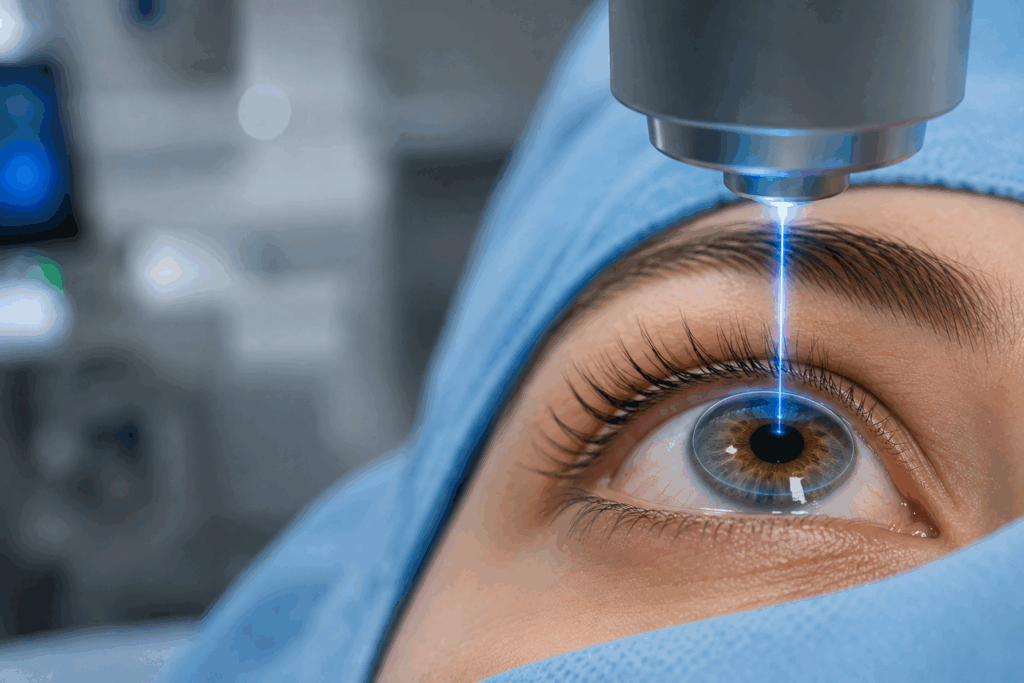
Medically Reviewed by Dr. Apoorva Aggrawal, MS, Refractive surgeon
Key Takeaways
- SMILE is a flapless vision correction surgery performed with the help of Visumax machine by Zeiss. SILK is the newest advancement in lenticular extraction techniques and it corrects eye power with the help of the advanced ELITA platform by Johnson & Johnson. Shroff Eye Centre’s doctors prefer SILK and perform this regularly.
- LASIK is a flap based refractive procedure which is done using the Wavelight platform at Shroff Eye Centre.
- SMILE, SILK & LASIK are all excellent procedures if patient selection is proper-explained.
Choosing the right laser vision correction option can feel overwhelming, especially with new procedures entering the market every few years. If you’ve been researching specs removal surgery, chances are you’ve come across both SILK & SMILE. In this blog, we will discuss how SMILE eye surgery actually works, who it’s suited for, and how it compares to LASIK and SILK. SILK is the newer lenticular extraction technology available at Shroff Eye Centre so you can have an informed conversation with your eye surgeon.
What Is SMILE Eye Surgery?
SMILE (Small Incision Lenticule Extraction) is a type of laser eye surgery used to correct myopia (nearsightedness) and astigmatism. Hypermetropa correction is available on the Visumax 800 model but it is not yet being widely used. In SMILE, a femtosecond laser creates a thin disc of tissue, called a lenticule, inside the cornea, which is then removed through a very small incision, reshaping the cornea and correcting refractive error or eye power.
How Does SMILE Eye Surgery Work?
The SMILE procedure is typically completed in three steps:
Lenticule creation:
A femtosecond laser creates a precise, disc-shaped layer of tissue within the cornea, without cutting a flap.
Small incision:
The laser makes a tiny opening, usually 2 to 4 mm, at the edge of the treatment area.
Lenticule removal:
The surgeon gently extracts the lenticule through this incision, reshaping the cornea and correcting the refractive error.
The entire procedure usually takes just under 20 minutes for both eyes and patients can head back soon after surgery.
What Eye Conditions Can SMILE Surgery Treat?
SMILE is primarily used to treat:
- Myopia (nearsightedness) – effective for a wide range of prescriptions
- Astigmatism – moderate degrees can be corrected alongside myopia
SMILE can now treat some degree of hyperopia (farsightedness) but only when surgery is performed on the VisuMax 800 model.
What Are the Benefits of SMILE Eye Surgery?
- No flap creation, which reduces flap-related complications seen in some LASIK cases
- Less disruption to corneal nerves, which may lower the risk of post-surgery dry eye
- Small incision, making the procedure less invasive
- Quick procedure time, often just a few minutes per eye
- Stable, long-term results for appropriate candidates
Recovery After SMILE Eye Surgery
Recovery after SMILE eye surgery is generally smooth for most suitable candidates because the procedure does not involve creating a corneal flap. Many patients notice improved vision within 24-72 hours, although complete visual stabilization may take several days to weeks. Some irritation, dry eye, light sensitivity, or minor discomfort during the first week is usually expected and most patients manage these symptoms well with prescribed eye drops and post-operative care.
Risks and Limitations of SMILE
Like all refractive surgeries, SMILE carries some risks, including:
- Temporary dry eye or glare, especially at night
- Under- or over-correction requiring enhancement
- Rare risk of infection or inflammation
- Regression of eye power
- Limited effectiveness for hyperopia or very high refractive errors
No laser eye surgery is entirely risk-free, which is why a thorough consultation and realistic expectations matter more than the procedure name itself.
SMILE vs SILK vs LASIK: What’s the Difference?
All three procedures, SMILE, SILK and LASIK are established laser vision correction procedures with excellent visual outcomes and similar recovery time when performed on suitable candidates. The right choice depends on your eye prescription, corneal thickness, lifestyle, and the results of your pre-operative eye evaluation.
| Factor | SMILE | SILK | LASIK |
| Procedure type | Flapless, small-incision lenticule extraction | Flapless, small-incision lenticule extraction | Corneal flap created before laser reshaping |
| Best suited for | Active lifestyles, sportspersons | Active lifestyles, sportspersons, armed forces | Most people but not if you play sports or are in combat professions |
| Cost | 1.2-2.5 lacs | 1.2-1.5 lacs | 95k-1.8 lacs |
| Platform | Visumax by Zeiss | Elita by J&J | Wavelight by Alcon |
| Flap creation | No | No | Yes |
| Conditions treated | Myopia and astigmatism | Myopia and astigmatism | Myopia, hyperopia, and astigmatism |
| Corneal nerve disruption | Less | Less | More |
| Dry eye risk | Generally lower | Usually low | Comparatively higher |
What Is SILK Eye Surgery?
SILK (Smooth Incision Lenticule Keratomileusis) is one of the newest developments in flapless, lenticule-based laser vision correction surgery. Like SMILE, it reshapes the cornea through a small incision without creating a corneal flap. However, SILK uses a next-generation femtosecond laser platform designed for precise lenticule creation, lower energy delivery, and real-time treatment monitoring. These technological advancements may support a smooth visual recovery in suitable patients.
At Shroff Eye Centre, SILK is the flapless laser vision correction procedure available for eligible patients. If you’ve been researching SMILE eye surgery, it’s worth discussing SILK as it represents a newer evolution of the same flapless, lenticule-based approach. A comprehensive eye evaluation will help determine whether SILK or another vision correction procedure is the right choice for your eyes.
SMILE vs SILK: Which Laser Vision Correction Procedure Is Right for You?
Both laser eye surgeries correct vision by similar lenticule-extraction principles and both have similar safety and risk profiles. Both give excellent visual outcomes and have similar recovery times. The honest answer which nobody will give you other than us- the differences are largely technical and also dependant on surgeon preference but SILK does use lower energies which theoretically makes it slightly better for the tissue. Choose a good surgeon, don’t stress about the technique.
How Much Does SMILE & SILK Eye Surgery Cost in India?
Cost depends on the hospital, technology, and the city. The exact cost may also vary based on the surgeon’s expertise.
SMILE eye surgery cost in India typically ranges from Rs. 1.2- Rs. 2.5 lakh for both eyes.
The cost of SILK eye surgery in India varies from Rs 1.2 lac – 1.8 lacs.
Shroff Eye Centre offers SILK as its flapless vision correction procedure and the pre-workup charge is waived if the surgery is done.
Frequently Asked Questions
Q: What is the difference between SMILE and SILK eye surgery?
Both SMILE and SILK are flapless, lenticule-based laser vision correction procedures that reshape the cornea through a small incision. SILK uses a newer-generation ELITA laser platform, while SMILE uses VisuMax platform.
Q: Which is the best surgery for specs removal- SILK, SMILE or LASIK?
There is no single “best” procedure- the most suitable procedure depends on your glass prescription, corneal thickness, eye health, and your surgeon’s evaluation.
Q: Who Is a Good Candidate for SMILE Surgery?
You may be a suitable candidate for SMILE-type refractive surgery if you:
- Are at least 18 years old with a stable prescription for 6–12 months
- Have myopia (nearsightedness), with or without moderate astigmatism
- Have adequate corneal thickness
- Are in good general eye health, with no active corneal disease
- Lead an active lifestyle, including regular sports or physical activities
Q: Who May Not Be Suitable for SMILE?
SMILE and similar flapless procedures may not be recommended if you:
- Are under 18 or over 45 years of age
- Have high myopia or hyperopia (farsightedness)
- Have thin corneas or signs of other eye diseases
- Have chronic health conditions like autoimmune diseases
- Have unstable vision that’s still changing
- Are pregnant or breastfeeding, as hormonal changes can affect prescription stability
A detailed pre-surgery evaluation, including corneal mapping, is essential to confirm candidacy for any laser vision correction procedure.
Q: Is SMILE eye surgery painful?
No. The procedure is performed under topical anesthesia (using numbing eye drops), so patients typically feel little to no pain.
Q: How long does it take to recover from SMILE or SILK surgery?
Most patients notice significant improvement within 24–72 hours, with clearing of vision over the next week. The final vision may take a few weeks to settle.
Q: Is SILK safer than SMILE?
Both SMILE and SILK are considered safe, flapless laser vision correction procedures when performed on suitable candidates.
Ready to explore your options for permanent spectacle removal?
Book a comprehensive refractive surgery evaluation at Shroff Eye Centre. Our specialists will assess your eyes and recommend the most suitable laser vision correction procedure based on your individual needs.