


 Call us
 Email us
Medically Reviewed by Dr. Minal Sharma, Vitreo-Retina specialist | Shroff Eye centre
Why is proper head positioning important after retina surgery?
The success of retina surgery doesn’t solely depend on the procedure itself; it heavily relies on how well patients adhere to post-surgery instructions. Proper head positioning after retina surgery is crucial because it helps the gas or oil bubble inside the eye press against the retina. This support allows the retina to heal properly and improves the success of the surgery. Incorrect head positioning can delay recovery or affect surgical outcomes. At Shroff Eye Centre, we emphasize the importance of proper positioning, as it helps the retina heal effectively, reduces strain, and enhances the overall recovery experience.
What is the role of Prone Positioning in Post-Retina Surgery Recovery
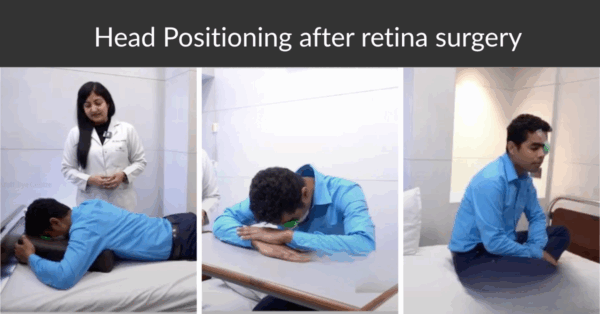
One of the most commonly advised head positions after retina surgery is the prone (face-down) position. We recommend that patients lie on their stomach as part of their post-surgery recovery routine. Although this position may feel unfamiliar at first, it is a necessary part of the healing process.
A prone pillow is quite helpful in helping you maintain the required position comfortably during recovery. You can place the prone pillow at the edge of your bed to provide adequate support. Rest your face in the gap of the pillow, ensuring that your head is positioned correctly. This method not only keeps your head in the proper alignment but also promotes comfort, enabling you to rest without straining your neck.
If the prone pillow feels uncomfortable for any reason, you can also try using a regular pillow at home with arms providing head support.
An important aspect when observing prone positioning is ensuring that your head remains straight. You must avoid turning your head to the left or right as this can interfere with correct support to the retina. The goal is to achieve a straight head alignment that prevents any unnecessary strain during the healing process. Our retina specialists at Shroff Eye Centre will offer specific advice tailored to your needs, so be sure to follow their guidance closely.
What is the Semi-Prone Position?
For some patients, the prone position may not be easy to maintain for extended periods. However, it is essential to follow your specialist’s recommendations regarding this positioning for the most effective recovery. At times, you may be asked to sit on a chair in a prone position with your forehead supported by folded arms on a table. This technique can provide an alternative way to support your head during recovery without requiring you to lie flat.
What is Head end raised position?
Sometimes you may be asked to lie down on an incline of a certain degree, usually 30 or 45 degrees. For this, two pillows can be placed under your head to elevate it slightly, making it easier to maintain a neutral head position. Alternatively, raising the head end of the bed can also assist in creating the right alignment.
At Shroff Eye Centre, we understand that every patient’s recovery process is unique. That’s why we recommend following the post-surgery care instructions provided by our retina experts. These instructions include the exact duration you need to maintain specific head positions, precautions to observe and medication to take.
Final Thoughts
Post-retina surgery recovery may seem daunting, but with the proper guidance, it becomes manageable. Correct head positioning is a key part of ensuring your retina heals effectively. At Shroff Eye Centre, we’re committed to offering you the best care and expertise, helping you navigate the recovery process with ease. By following the recommended positioning techniques and consulting with your retina specialist, you can ensure the best possible outcome for your eye health. Remember, your success is our priority, and we’re here to support you every step of the way. We, we understand the importance of expert eye care and we aim to provide our patients with the knowledge they need for a speedy and successful recovery. Here, we’ll guide you through essential head positioning techniques after retina surgery, ensuring you’re on the right track for optimal healing.
Frequently Asked Questions
Q1. Can I move my head while sleeping after retina surgery?
Only as your doctor advises. If you’ve been asked to sleep in prone or side position, keep your head that way even during sleep.
Q2. Can children follow head positioning after retina surgery?
Yes, with help from parents or guardians, even young patients can follow these positions.
Q3. Is head positioning painful?
It may feel uncomfortable in the beginning, but it doesn’t usually cause pain. You get used to it in 1–2 days.
Q4. What should I do if I miss the head position for some time?
Return to the correct position as soon as possible and inform your retina doctor if you missed it for a long time.
Q5. How long should I keep my head down after retina surgery?
Most patients need to keep their head in a face-down position for a few days to about 1–2 weeks. The exact duration depends on your surgery and your doctor’s advice.
About Dr. Minal Sharma

Dr. Minal Sharma, a Vitreo-Retina specialist at Shroff Eye Centre, is known for her expertise in diagnosing and managing complex retinal diseases and providing advanced medical and surgical retina care.
Specializations: Diabetic Retinopathy, Age-Related Macular Degeneration (ARMD), Retinal Detachment, Macular Disorders, Vitreo-Retinal Surgery.