



| |
|
|
| |
CORNEAL DISORDERS |
|
| |
|
|
| |
Corneal blindness accounts for 0.52% of total blindness in the
Indian subcontinent. The cornea can be the site of various disorders.
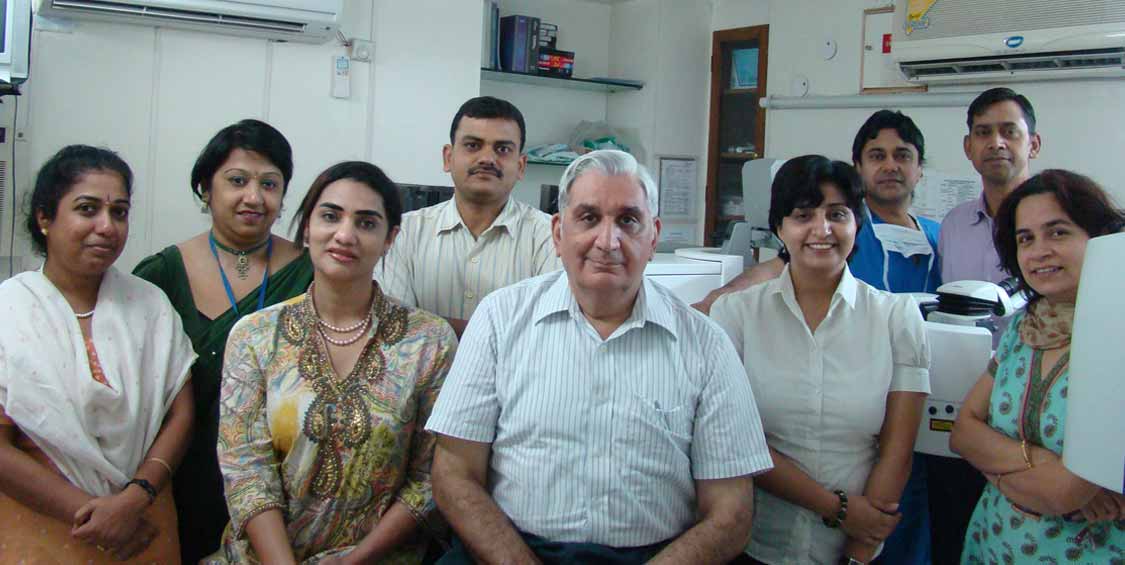
At Shroff Eye Centre, we have a dedicated team of cornea specialists
committed to provide you with the best possible care to protect
your vision.
Click for Appointment
|
|
| |
|
|
| |
Learn about common corneal disorders
and their treatment. |
|
| |
The Normal Cornea |
|
| |
Foreign Bodies, Corneal
Abrasions & Injuries |
|
| |
Chemical Burns |
|
| |
Infections of the Cornea |
|
| |
Pterygium |
|
| |
Degenerative or Aging
Changes of the Cornea |
|
| |
What is Dry Eye Syndrome?
|
|
| |
Keratoconus |
|
| |
What is Corneal Transplantation?
|
|
| |
How is a cornea transplanted?
|
|
| |
How successful is corneal
transplantation? |
|
| |
What is Computer Vision
Syndrome? |
|
| |
|
|
| |
The Normal Cornea
|
|
| |
The eye is like a camera in which lenses focus the picture on a
light sensitive film. In the human eye, the transparent cornea and
lens focus light on the retina, which changes it into electrical
signals, which are then transmitted to the brain by the optic nerve
to be perceived as images.

The cornea is the front transparent window of the eye and forms
the outermost one-sixth of the eyeball. It is lamellar in nature
(like plywood) and is made up of 5 layers, each of which has a definite
function. In order to be effective it must remain transparent. Freezing,
heating, molding, lathing, tattooing, excising, incising and transplanting
are all means by which the delicate and sensitive cornea has been
altered for optical, therapeutic and cosmetic purposes. Due to absence
of blood vessels in the cornea, much of its oxygen requirement comes
from atmospheric oxygen dissolved in the tear film. When the eyelids
are closed, oxygen enters the cornea from the superficial conjunctival
vessels. Nutrients needed for the cornea pass into it by diffusion.
Hence, carbon dioxide and waste products are also removed across
the tear film. Hence, any deficiency of the tear film will directly
or indirectly affect the cornea.
|
|
| |
|
|
| |
Foreign Bodies, Corneal
Abrasions & Injuries |
|
| |
Since
the abundant nerve supply of the cornea makes it one of the most
sensitive parts of the body, it serves as an excellent "watchdog"
for foreign material entering the eye. Dirt or specks lodging in
the eye may produce scratching, knife-cutting sensations that the
sensitive corneal nerves transmit to the brain. If the cornea loses
this sensitivity due to in- jury or impairment by disease, it loses
its protective function. Foreign bodies may embed in the cornea.
A foreign body on the cornea needs urgent attention by an ophthalmologist.
One should not attempt to remove it by rubbing the eye.
A twig of a tree, a piece of paper, or a fingernail can produce
corneal abrasions. If not attended to immediately, secondary infection
can occur which could lead to vision-threatening complications.
Contact lenses also can produce an irritable eye from a corneal
abrasion. Until an eye specialist can be consulted, the contact
lens should be removed and the eye patched.
Injuries to the eye with sharp or blunt objects require urgent
attention of your ophthalmologist, especially to rule out corneal
injuries, which can be sight-threatening.
|
|
| |
Go back
to the top » |
|
| |
Chemical Burns |
|
| |
Acid
or alkaline solutions splashed into the eye may be potentially sight
threatening. Symptoms (such as pain, redness, watering and light-sensitivity)
occur immediately after exposure to the chemical and may be severe
in nature. Chemicals in the eye need to be thoroughly washed out immediately
with water. THEREAFTER, URGENT CONSULTATION WITH AN EYE SPECIALIST
IS NECESSARY. |
|
| |
|
|
| |
Infections |
|
| |
Inflammation
of the cornea, or keratitis, may be secondary to conjunctivitis, blepharitis
(inflammation of eyelid margins), or injury. Keratitis is characterized
by a painful red eye, sensitivity to light, and an occasional scratching
sensation upon blinking. An ulcer may develop in the cornea after
a bacterial, viral, fungal, or other infectious organism invades its
outer layer. Herpes simplex, a virus can invade the cornea after injury,
producing keratitis. Herpes zoster, another viral agent, produces
inflammation of the cornea, especially if the skin of the nose is
involved. A marginal ulcer is a corneal infection that occurs near
the outer edge of the cornea. Central corneal ulcers due to bacteria,
viruses, or fungi can be severe and serious; they may even cause loss
of the eye. With these severe ulcers, the eye sets up a defense reaction
to help fight the infection. This disease requires the immediate attention
of an ophthalmologist. With intensive medical treatment, the infection
is brought under control. Sometimes drastic surgical intervention
has to be undertaken. Often after elimination of the infection, there
is residual scarring of the cornea, which requires corneal transplantation
for restoration of vision.
|
|
| |
|
|
| |
Pterygium |
|
| |
This
grayish elevated growth of elastic and connective tissue containing
blood vessels invades and grows over the cornea. It may result from
irritation to the eye from wind, heat of the sun, dust, or smoke.
If the pterygium progresses to grow over the center of the cornea,
sight may be impaired or even lost. Before this occurs, the pterygium
should be removed surgically. At our centre, pterygium is removed
by a specialized technique called Conjunctival Autografting, where,
the pterygium is excised, and a conjunctival graft, taken from a
healthy part of the same eye is used to cover the defect. This technique
prevents recurrence of the pterygium, which would normally occur
after conventional pterygium removal without grafting. Some people
confuse a cataract with a pterygium by calling a cataract a "skin
growing over the eye." A cataract, however, is a clouding of the
lens, which is located inside the eyeball.
|
|
| |
Go back
to the top » |
|
| |
Degenerative or Aging
Changes of the Cornea |
|
| |
Dystrophies or degenerative aging processes may develop
in the cornea and interfere with vision. They are slowly progressive,
non-inflammatory, and usually affect or involve both eyes. They may
produce a haziness or cloudiness of the cornea. If the vision is markedly
impaired, contact lenses may be prescribed to improve vision. If they
do not help, a corneal transplantation may be performed to restore
useful sight. |
|
| |
|
|
| |
What is Dry Eye Syndrome?
|
|
| |
Dry eye syndrome is a leading cause of ocular discomfort affecting
millions of people. Dry eye conditions are a spectrum of disorders
with varied etiology ranging from mild eyestrain to very severe
dry eyes with sight threatening complications.
Although the typical patient of dry eyes is elderly, or suffers
from autoimmune disease, increasing numbers of patients do not fit
this profile. Younger patients who work with computers can suffer
from dry eyes more often than elderly patients. Dry eye condition
is also aggravated in polluted conditions, dry weather, decreased
ambient humidity as seen with air conditioning and indoor heaters.
It may also result from the abnormalities in one or more of the
tear film components, ocular or systemic diseases, and various drugs.
Dry eye syndrome is usually treated with tear supplements and lubricants.
However, if these do not help, the insertion of microscopic plugs
(temporary or permanent) can be inserted to help conserve tears
and prevent them from draining away. In severe cases, surgical intervention
may be essential.
|
|
| |
Go back
to the top » |
|
| |
Keratoconus |
|
| |
Normally the cornea is nearly spherically shaped thus allowing
light to be focused clearly on the back of the eye (retina). However
in a condition called Keratoconus, the cornea begins to thin, and
this allows the normal pressure of the eye to make the cornea bulge
forward taking on a cone-shape. As the cornea gradually becomes
more cone-shaped, the vision blurs and becomes distorted due to
a high degree of astigmatism. Initially vision may be correctable
with spectacles, but as the condition progresses, and the cornea
becomes more irregular causing distorted vision, spectacles become
less effective. In such a situation, contact lenses not only provide
better vision, but also help to retard the progress of the disorder.
A rigid contact lens (RGP / "semi-soft" contact lenses) must be
used, so that it can hold its shape, as a soft lens would simply
mould to the existing shape and thus not allow complete correction
of the problem. Sometimes the patient is fitted with soft lenses
(for comfort), over which semi-soft lenses are fitted ("piggy-back"
lenses).
Fitting
contact lenses for keratoconus requires expertise. Well-fitting
contact lenses dramatically improves such a patient's vision to
nearly that of a normal person's, and significantly improves his
or her quality of life. Any excessive pressure of a poorly fitting
lens on the cone apex can cause permanent scarring within months
or years (This scarring can also occur naturally). For this reason
it is important for regular follow-up visits to be made so that
any corneal changes that have occurred can be compensated for in
the design of a new lens. It is quite common for patients to be
refitted at irregular intervals as the condition progresses. Rarely,
scarring is so severe that a corneal graft (transplant) is necessary.
A recent promising treatment modality for keratoconus is C3R (Corneal
Collagen Cross-linking with Riboflavin). Shroff Eye Centre now offers
you Cross Linking of the Cornea with Riboflavin (C3R), which is
a new curative approach to increase the mechanical stability of
corneal tissue. The aim of this treatment is to create additional
chemical bonds inside the corneal stroma by means of a highly localized
photo polymerization.
The indications for cross linking today are corneal ectasia the
disorders such as keratoconus and pellucid marginal degeneration,
iatrogenic keratectasia after refractive lamellar surgery and corneal
melting that is not responding to conventional therapy.
|
|
| |
|
|
| |
What is Corneal
Transplantation? |
|
| |
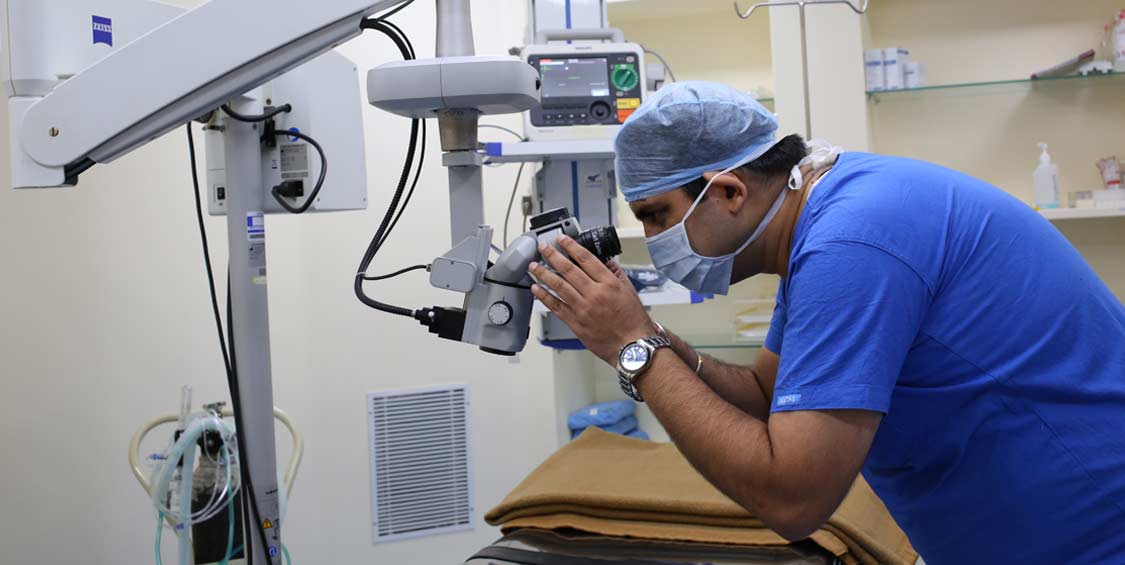
Corneal transplantation, or keratoplasty, is an operation designed
to correct blindness resulting from corneal disease. When the cornea
is involved by degenerative change, infection, or injury, scar tissue
may form as healing occurs. If the scar involves the center of the
cornea or the entire cornea, vision is impaired. Depending upon
the degree of involvement, the person may not be able to see to
perform his daily tasks. Contact lenses rather than spectacles may
partially improve vision, but often they are ineffective and a corneal
transplant is required. Eye tissue from one person is transplanted
into the eye of another person who has been blinded by a corneal
scar or disease.
Many people are under the false impression that one good eyeball
is transplanted for another eyeball which is diseased. Some mistakenly
believe that a blue-eyed person's eyes cannot be used for transplantation
in a brown-eyed person. Neither of these statements is true. The
only tissue used in the transplant is the cornea, which has nothing
to do with the colored part of the eye. Since the eye is connected
to the brain by the optic nerve, which is a part of the central
nervous system, the eye is not and cannot be transplanted.
If the eye were compared to a watch, the crystal of the watch would
be synonymous with the cornea of the eye. The face of the watch
would be equivalent to the iris and lens. If the watch crystal is
clean and transparent, the face of the watch will be seen clearly.
However, if paint is smeared over the crystal of the watch, the
face of the watch will not be seen and the paint cannot be wiped
off. To see the watch face clearly again, the crystal must be removed
and replaced with a new clean crystal.
|
|
| |
Go back
to the top » |
|
| |
How is a cornea
transplanted? |
|
| |
A
corneal transplantation, like a cataract operation, is usually performed
under local anesthesia. General anesthesia is used for children
and apprehensive or nervous patients. The operation is completely
painless and takes about one hour to perform.
The diseased, cloudy, opaque cornea is removed from the recipient's
(living patient's) eye using a special blade, and replaced by a
new clear cornea (graft) from the donor's (deceased person's) eye.
Earlier we transplanted the entire thickness of the cornea (Penetrating
Keratoplasty). Today depending on the extent, location and type
of the corneal disorder, we can selectively transplant either the
front part (Anterior Lamellar Keratoplasty), or the back portion
(Endothelial Lamellar Keratoplasty). The new cornea is then sutured
or stitched into place. As few as eight and as many as 20 or more
sutures may be used, according to the size of the graft, to hold
the border of the graft to the border of the recipient. If the operation
is successful and the graft "takes" and remains clear, the patient
should see well again, provided the lens and the retina behind the
cloudy cornea are normal. The patient is usually hospitalized for
one day but requires rest for the next one month although returning
to light work is not a problem. However frequent follow-ups are
required over the following six months to one year.
Recently, a new technology called Femtosecond Laser (IntraLaseTM)
is available to make precise laser aided cuts in the donor and host
cornea. Intralase-aided cuts improve wound healing leading to faster
recovery, and potentially decreases the rate of transplant rejection.
|
|
| |
Go back
to the top » |
|
| |
How successful is
corneal transplantation? |
|
| |
In favorable subjects the rate of success of corneal
transplantation may be as high as 60%, with good final visual acuity
with glasses. In unfavorable subjects, the rate of success may be
around 10 to 20%. Each patient is evaluated individually before definite
results can be predicted. The most important factors in determining
the final results are:
Basic corneal disease (some types of corneal disease respond
better to corneal transplantation than others).
State of the donor's cornea.
Surgical technique and skill.
Healing ability of the recipient cornea.
Sensitivity reactions between donor and recipient cornea may
lead to transplant rejection.
The advantages of lamellar keratoplasty (newer techniques) are better
visual outcome, quicker rehabilitation and lower rates of transplant
rejection.
A corneal transplantation will not help every blind person to see
again. If a person is blinded by glaucoma, a detached retina, or
degenerative change and the retina has been damaged or destroyed,
nothing can restore lost sight. Corneal transplantation restores
vision only in eyes that have been partially blinded by corneal
disease. Some vision must be present before transplantation is even
contemplated.
THE OCCURRENCE OF PAIN, REDNESS, WATERING, LIGHT-SENSITIVITY AND
DIMINISHED VISION, ANY TIME (EVEN MONTHS OR YEARS) AFTER CORNEAL
TRANSPLANTATION SURGERY, REQUIRES IMMEDIATE ATTENTION OF YOUR OPHTHALMOLOGIST.
|
|
| |
|
|
| |
|
|
| |
For further information consult the Cornea Service at Shroff Eye Centre at Shroff Eye Centre |
|
| |
|
|
| |
Go back
to the top » |
|
|
|
|